IHASHOP Dropshipping Automation Module
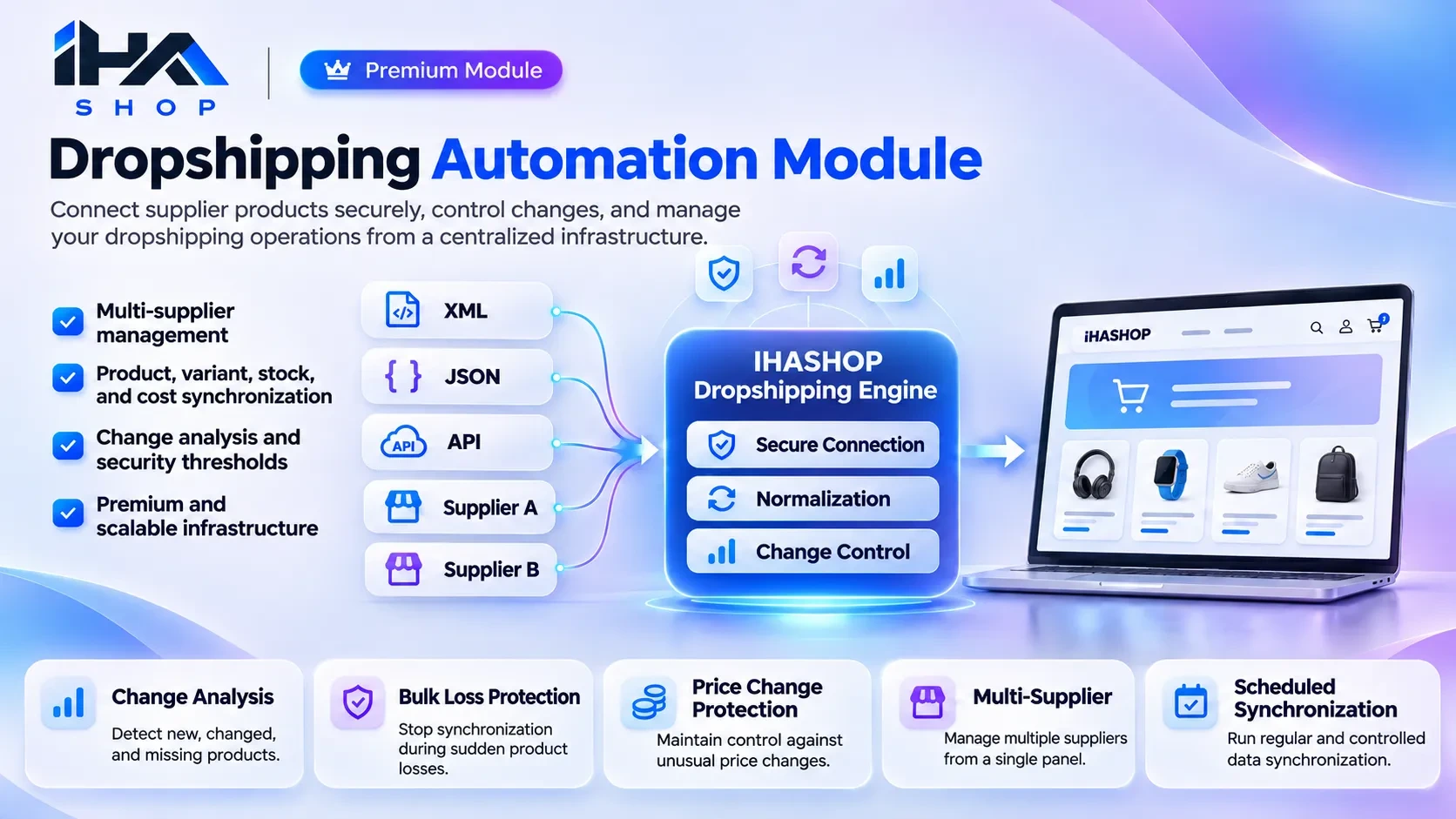
Connect supplier product feeds to your store securely with the IHASHOP Dropshipping Automation Module; normalize product, variant, category, stock, and cost data, analyze changes before applying them, and manage your dropshipping operation from a centralized infrastructure.
Dropshipping is not just about importing an XML file into your store.
When the real operation begins, much harder questions arise:
What happens when the supplier's stock changes?
If hundreds of products disappear from the feed overnight, will they all be removed from the store?
If supplier prices change in bulk, will the sale prices in your store be updated blindly?
Will two different suppliers using the same SKU or barcode mix up your products?
Where will the supplier access key be stored?
Can a corrupted or compromised feed harm your store?
IHASHOP Dropshipping Automation Module is designed to transform the dropshipping operation from a simple XML import process into a controlled supplier integration engine.
Product data coming from the supplier is not directly converted into a store product. First, it is normalized into a common data contract. Product, variant, source category, stock, cost, currency, and VAT information are parsed; then compared with the existing supplier data.
This way, IHASHOP does not just say “new data has arrived.” It also knows:
-
How many new products arrived?
-
How many products changed?
-
How many products stayed the same?
-
How many products disappeared?
-
How many variants had their cost changed?
-
Is the change normal, or is it a bulk data problem?
Module Features
Screenshots