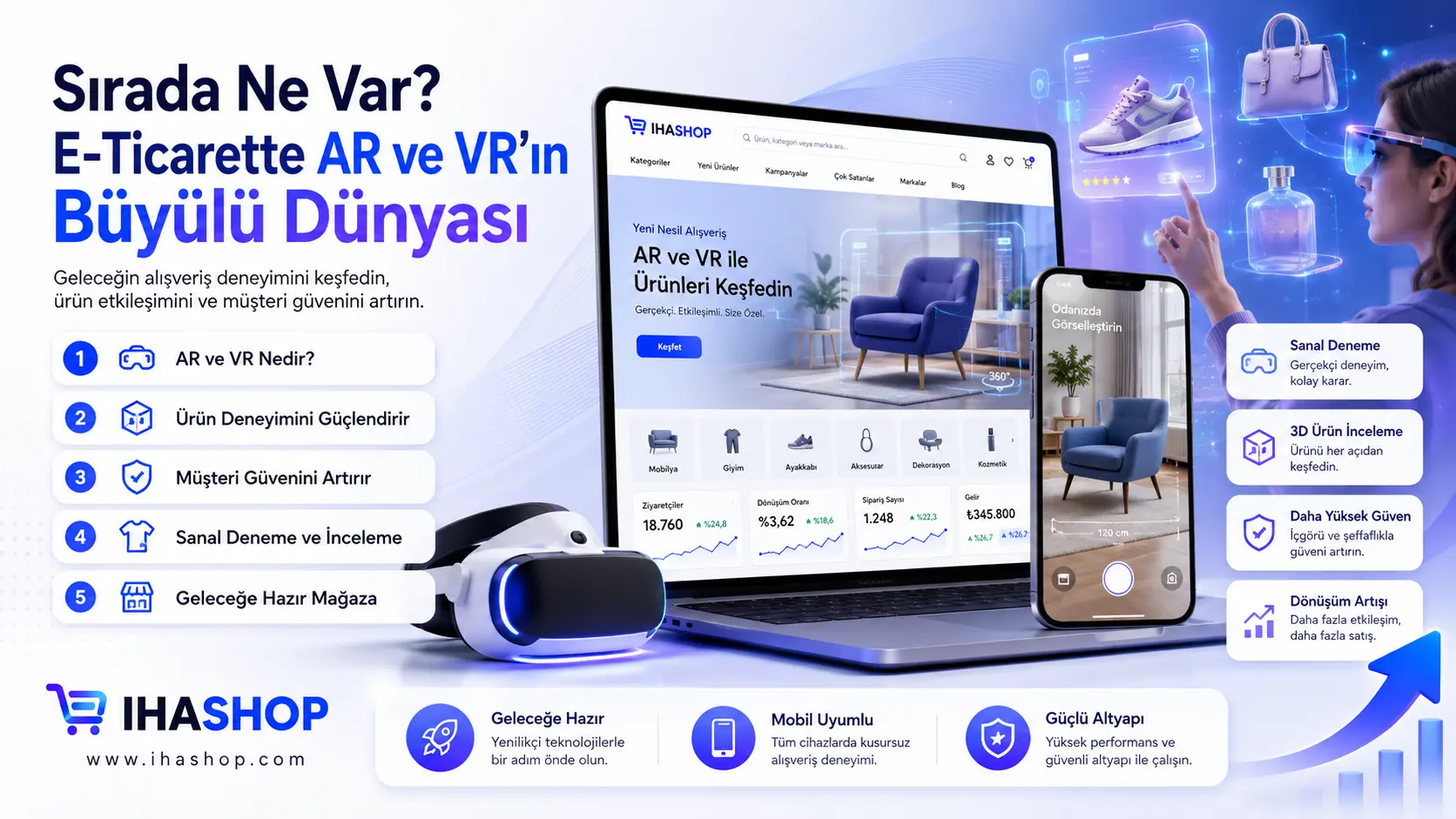
One of the biggest expectations of online shoppers is to fully understand a product before making a purchase. While high-quality photos, videos, and detailed descriptions play a crucial role, allowing customers to visualize a product in their own space or examine it realistically accelerates the decision-making process.
This is exactly where augmented reality (AR) and virtual reality (VR) technologies come into play. Integrating AR and VR in e-commerce does not just give your online store a futuristic look; it fundamentally transforms the product experience into something more interactive, reliable, and engaging.
The future of digital retail goes beyond simple product listings. Modern consumers expect to see how a sofa fits in their living room, how sunglasses look on their face, or even walk through a virtual boutique. This paradigm shift highlights how deeply e-commerce is merging with advanced technology to deliver immersive shopping experiences.
What are AR and VR in E-Commerce?
Augmented Reality (AR) overlays digital 3D objects onto the physical world. Using a smartphone camera or compatible device, users can project products into their immediate environment. Examples include testing how a new armchair fits in a living room or virtually trying on a pair of glasses.
Virtual Reality (VR), on the other hand, fully immerses the user in a completely digital environment. Through VR, customers can navigate a virtual showroom, inspect 3D products from every angle, and enjoy an immersive, in-store shopping experience from the comfort of their homes.
While AR is primarily used to project products into the customer's real-world environment, VR shines in creating comprehensive, simulated retail spaces that mimic physical brick-and-mortar stores.
Elevating the Product Experience
The inability to physically touch or try a product remains one of the greatest friction points in online shopping. This challenge is especially prominent in industries like furniture, home decor, fashion, cosmetics, and consumer electronics, where size, fit, and aesthetic compatibility are critical.
AR and VR technologies successfully bridge this gap. By enabling 3D product visualization and interactive previews, customers can evaluate dimensions, colors, and designs accurately. When buyers can interactively test products, their purchase hesitation drops, leading to higher e-commerce conversion rates and a more satisfying shopping journey.
Boosting Customer Trust and Reducing Returns
Cart abandonment and buyer hesitation often stem from uncertainty—will the product look like the picture? Will it fit? AR and VR-enabled shopping experiences empower consumers to make highly informed buying decisions.
A customer who has virtually tested a product feels significantly more confident at checkout. This boost in customer trust not only drives sales but also plays a vital role in reducing product return rates, as expectations align perfectly with reality. When customers know exactly what they are buying, post-purchase disappointment is minimized.
Which Industries Benefit the Most?
While immersive tech is highly impactful, its benefits peak in specific retail sectors:
- Furniture & Home Decor: Visualizing furniture scale, color, and placement in real-time within the actual room.
- Fashion & Accessories: Offering virtual try-on experiences to speed up apparel, jewelry, and eyewear purchase decisions.
- Cosmetics: Allowing users to preview makeup shades and skincare applications digitally on their own faces.
- Tech & Gadgets: Providing detailed 3D exploded views to explain complex technical features and internal components.
Ultimately, AR and VR deliver the highest ROI in industries where visual evaluation and experiential proof dictate the buying process.
Is It a Must-Have for Every Online Store?
While AR and VR are powerful tools, they are not immediate requirements for every starting business. Every online storefront must first secure its foundation: a lightning-fast infrastructure, accurate product data, high-quality media, user-friendly UI/UX, and secure payment gateways.
Therefore, immersive technologies should be viewed as a strategic step for scaling and market differentiation. If your product category matches these interactive experiences and your target audience is tech-savvy, integrating AR and VR can establish a massive competitive advantage, making your brand look highly innovative.
Conclusion
The trajectory of e-commerce points toward highly interactive, personalized, and trust-driven experiences. Customers no longer want to just browse; they want to experience. AR and VR are at the forefront of this digital retail revolution.
While implementing these solutions requires strategic timing, having a flexible and scalable foundation is essential. A robust e-commerce platform like IHASHOP ensures your online store meets today’s high-performance sales demands while remaining fully compatible with the advanced, immersive technologies of tomorrow. Secure your place in the future of retail with IHASHOP.