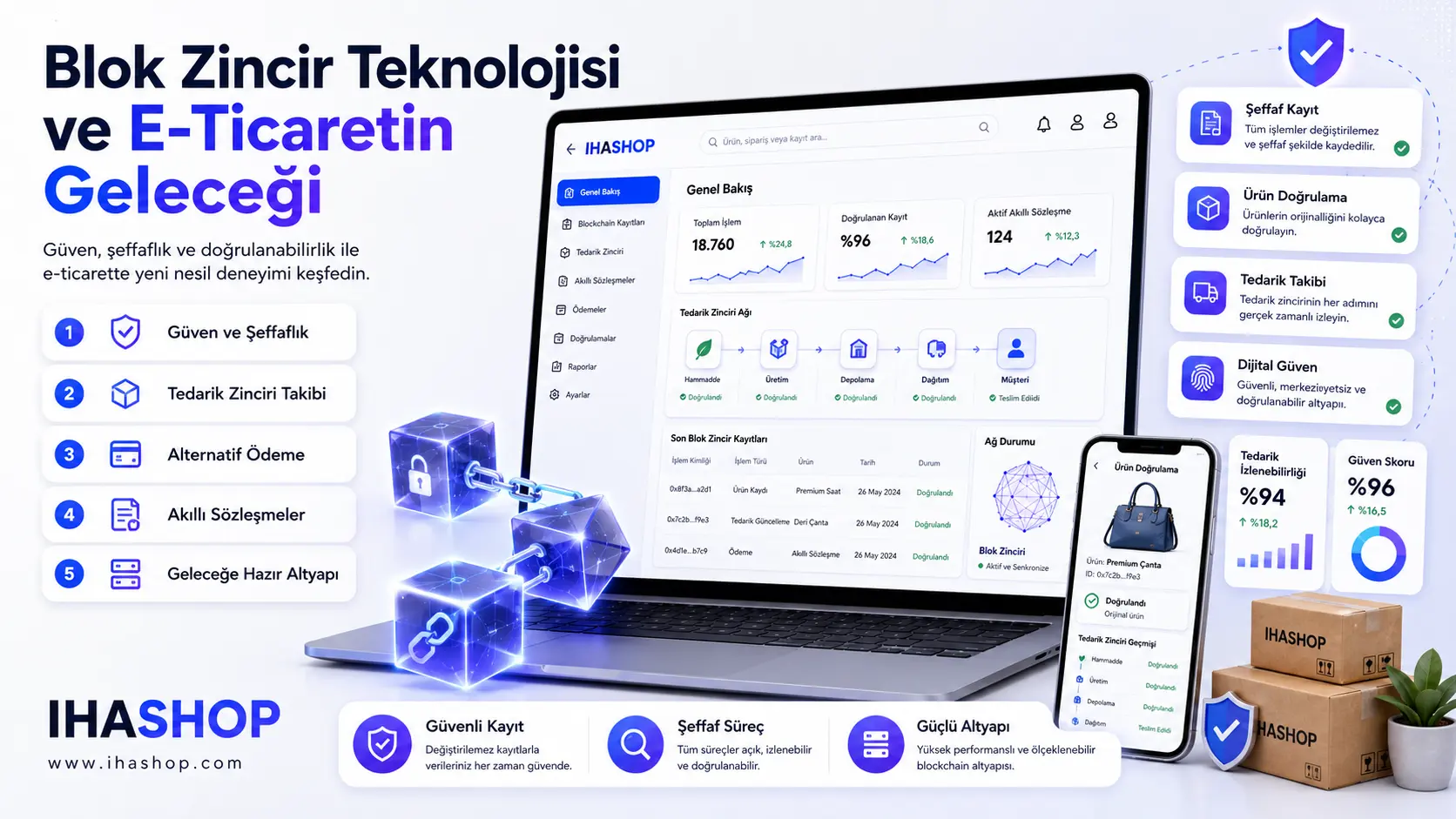
Blockchain technology has emerged as one of the most transformative digital innovations of recent years. While initially associated almost exclusively with cryptocurrencies, its underlying architecture has far broader applications. By storing data in a decentralized, verifiable, and tamper-proof ledger, blockchain provides unparalleled security and transparency—making it highly relevant for modern digital commerce.
In the context of e-commerce, blockchain technology opens new horizons for secure payment processing, real-time supply chain tracking, anti-counterfeiting product verification, digital license delivery, and automated smart contracts. However, when evaluating this technology, businesses must look past the hype and focus on practical, real-world operational needs.
Like any emerging technology, blockchain is not a silver bullet. When deployed strategically, it can foster consumer trust, streamline operational auditing, and secure transaction pipelines. Conversely, premature or poorly planned integration can introduce unnecessary complexity and overhead.
Building Trust and Transparency in Digital Retail
In e-commerce, customer trust is the ultimate driver of conversion rates. Shoppers need absolute certainty regarding product authenticity, merchant credibility, transaction security, and reliable order fulfillment.
Because data recorded on a blockchain ledger is immutable, it establishes an audit trail that is exceptionally difficult to alter retroactively. This characteristic builds immense trust in areas such as product sourcing, warranty activation, supply chain checkpoints, and transaction history.
For instance, customers can trace a product’s journey from the raw material supplier and manufacturer to the warehouse and final delivery. This level of transparency dramatically boosts consumer confidence, particularly for high-value goods or sectors prone to counterfeiting.
Moreover, this transparency isn't just customer-facing; it empowers businesses to audit their internal logistics. Verifiable records mitigate disputes with partners, shipping providers, and buyers by providing a single source of truth.
Strengthening Supply Chain Tracking
Modern e-commerce supply chains are highly complex, often involving manufacturers, distributors, regional warehouses, customs, and last-mile delivery partners. Maintaining accurate, real-time records across these touchpoints is critical for scaling businesses.
For industries like organic food, cosmetics, luxury goods, electronics, and pharmaceuticals, origin verification is paramount. Tracking a product from production to delivery safeguards both the brand reputation and the consumer’s health or investment.
Blockchain technology streamlines supply chain management by creating an unalterable record of manufacturing dates, batch numbers, quality assurance checks, shipping milestones, and delivery confirmations.
With this decentralized ledger, consumers gain unprecedented insight into their purchases. In trust-sensitive markets, offering this verifiable history serves as a powerful competitive differentiator.
Expanding Alternative Payment Methods
For many, blockchain is synonymous with cryptocurrency payments. In global markets, accepting crypto assets can serve as an attractive alternative payment method. For cross-border e-commerce, localized and decentralized payment options can bypass high international transaction fees and currency conversion friction.
However, merchants must approach crypto payments with careful deliberation. It is not a one-size-fits-all solution. Businesses must evaluate regulatory compliance, accounting standards, tax implications, refund protocols, price volatility, and the payment preferences of their target audience.
Just because a payment method is technologically feasible does not mean it aligns with your current business model. E-commerce merchants must balance innovation with transaction security, legal compliance, processing fees, and overall user experience.
While blockchain-enabled payment gateways are poised to become more mainstream, the immediate priority for most e-commerce brands remains optimizing their core payment gateways to be fast, secure, and intuitive.
Automating Operations with Smart Contracts
Smart contracts are self-executing digital agreements that trigger automatically when predefined conditions are met. This technology can optimize e-commerce logistics by automating rule-based workflows.
For example, payouts to suppliers can be triggered automatically upon verified cargo delivery. Digital downloads or software license keys can be instantly released the moment a transaction is confirmed. Warranty registrations or subscription renewals can be managed seamlessly based on real-time triggers.
This automated approach reduces administrative overhead and is particularly valuable for digital products, SaaS models, and multi-vendor marketplaces. However, the logic behind these smart contracts must be flawlessly defined.
Flawed automation can lead to systemic errors and damage customer satisfaction. Before adopting advanced automated contracts, businesses must ensure their baseline operational workflows are thoroughly mapped, tested, and optimized.
Product Verification and Counterfeit Prevention
Counterfeiting is a major challenge in modern e-commerce. Buyers purchasing luxury fashion, consumer electronics, cosmetics, or collectibles demand absolute proof of authenticity.
Blockchain offers a robust framework for product authentication. By assigning unique serial numbers, manufacturer credentials, or digital certificates to a blockchain ledger, brands can provide a verifiable verification method. Shoppers can scan a QR code to instantly verify that their purchase is genuine.
This mechanism protects brand equity and reassures customers that they are receiving authentic goods rather than cheap imitations.
For this system to succeed, collaboration across the entire supply chain—from manufacturer to retailer—is essential. Blockchain does not generate trust on its own; it amplifies trust when populated with accurate, verified data.
How E-Commerce Businesses Should Approach Blockchain
Integrating blockchain should never be driven solely by industry hype. Instead, identify the specific operational bottleneck you need to solve. Are you looking to prevent counterfeits, track a complex supply chain, offer alternative global payments, or secure digital product delivery?
Define the problem first, then evaluate if blockchain is the most efficient solution. In many scenarios, a well-optimized relational database, robust API integrations, and streamlined operational workflows are more than sufficient and far more cost-effective.
A successful digital storefront requires a rock-solid foundation. If your product catalog, order processing, checkout security, customer support, and inventory tracking are not operating seamlessly, advanced blockchain integrations will not solve your core issues.
Therefore, blockchain should be viewed as a strategic, secondary phase of optimization once your primary e-commerce infrastructure is fully matured.
Conclusion
Blockchain technology holds immense potential to redefine trust, transparency, and operational efficiency in e-commerce. From supply chain tracking and product authentication to smart contracts and alternative payments, it offers innovative tools for forward-thinking brands.
However, a realistic approach is key. Blockchain is not a standalone miracle; its efficacy depends entirely on your underlying infrastructure and operational execution. True success lies in matching the technology to genuine business needs.
For e-commerce brands, the immediate priority must always be establishing a fast, secure, user-friendly, and highly manageable online store. Once this core foundation is secure, you can strategically scale into advanced technologies like blockchain with confidence.
With IHASHOP, you can build a powerful e-commerce foundation to manage your products, orders, customers, and content seamlessly. Establish your digital presence today on a reliable platform, keeping your business agile and ready to integrate next-generation technologies whenever you are ready.