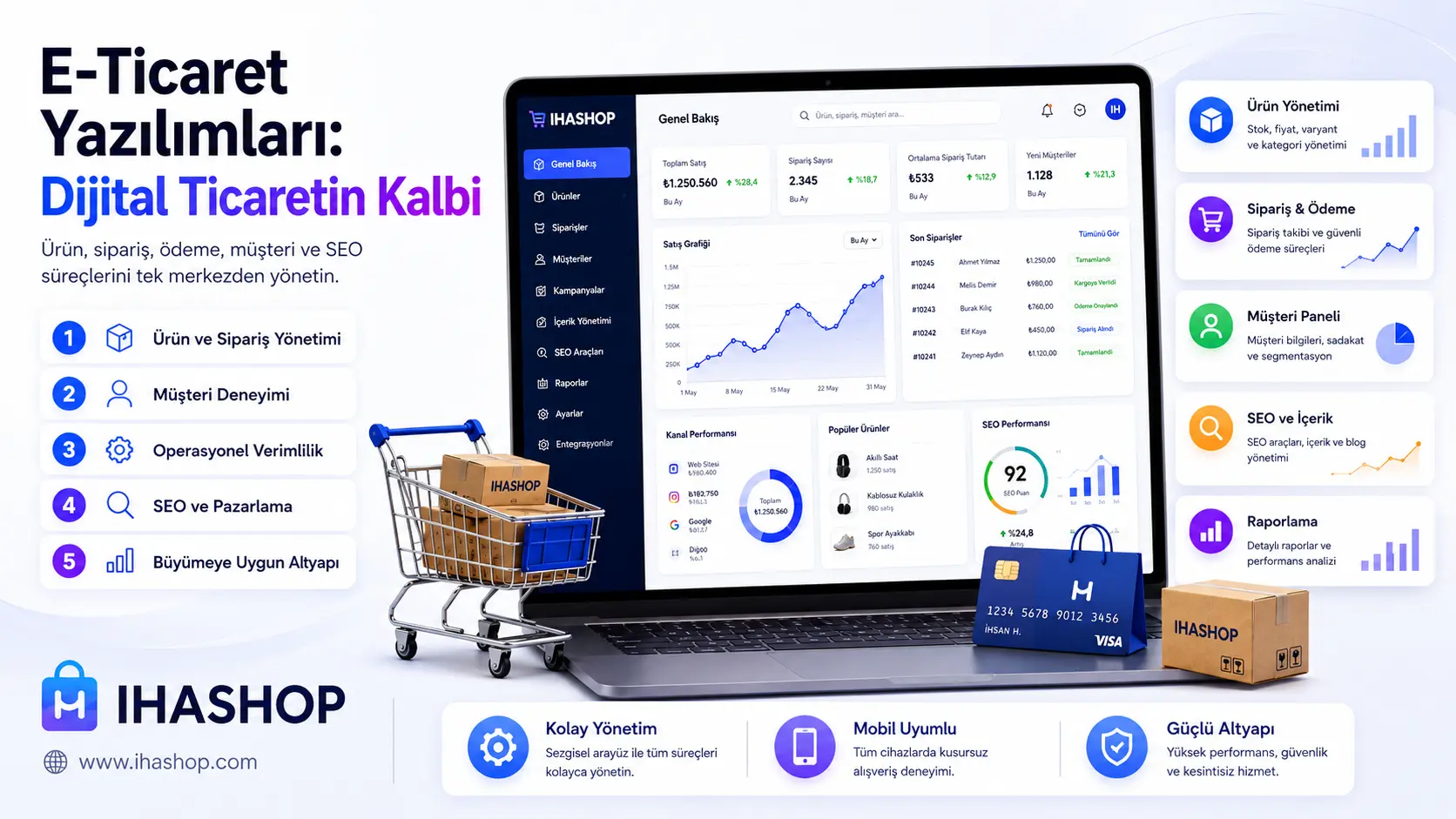
Success in digital commerce goes beyond product quality or ad spend. The ultimate factor determining how smoothly your online business runs, the shopping experience you provide, and how efficiently you manage sales is the underlying e-commerce software.
Your e-commerce platform directly impacts how products are displayed, how orders are processed, how payments are secured, and how easily you manage your storefront. This is why e-commerce software is truly the heart of digital commerce.
While an online store might first attract visitors with its design, long-term success relies on seamless navigation, frictionless checkout, and robust backend management. This is where the right software infrastructure makes all the difference.
What Does E-Commerce Software Do?
An e-commerce platform consolidates product management, inventory tracking, shopping cart functionality, payment gateways, shipping, invoicing, and marketing tools under one roof. Without this unified system, managing online sales becomes chaotic and inefficient.
From updating stock levels to adjusting prices, processing orders, and launching promotional campaigns, merchants rely entirely on their e-commerce software. It is not just a digital storefront; it is the operational nerve center of your business.
With a well-structured e-commerce solution, business owners can minimize manual errors, streamline order fulfillment, and gain complete control over their operations. This boosts efficiency and directly drives revenue growth.
Direct Impact on Customer Experience (CX)
Every touchpoint—from searching for a product to checking out and tracking a shipment—is shaped by the software's performance. Therefore, customer satisfaction is heavily dependent on your e-commerce infrastructure.
Fast page load speeds, intuitive navigation, smart filtering, secure checkout options, and transparent order tracking build trust and encourage repeat purchases. Conversely, slow, clunky, or insecure systems lead to high cart abandonment rates.
For modern consumers, the convenience and security of the shopping journey are just as important as the product itself. High-performing e-commerce software is a critical driver of positive customer experiences.
Driving Operational Efficiency
As an online business scales, operational demands grow. Managing more products, processing higher order volumes, and handling customer inquiries can overwhelm teams if done manually.
Professional e-commerce software automates inventory updates, order statuses, and invoicing from a single, centralized dashboard. This automation reduces human error and frees up valuable time.
By streamlining daily operations, business owners can shift their focus from administrative tasks to strategic marketing, brand building, and international expansion.
The Foundation for SEO and Digital Marketing
An online store cannot succeed if customers cannot find it. High visibility on search engines is essential for attracting organic traffic and driving sustainable sales.
SEO-friendly URL structures, customizable meta titles and descriptions, integrated blogging tools, and optimized landing pages form the bedrock of digital visibility. If your software lacks these features, your marketing efforts will yield limited results.
The ideal e-commerce platform must offer robust SEO tools and flexible campaign management features, turning your store into a powerful digital marketing engine.
Securing Payments and Order Workflows
The checkout process is the most critical phase of the customer journey. Any friction, error, or perceived security risk during payment can instantly ruin a sale.
Robust e-commerce software ensures secure, fast, and multi-channel payment integrations. Post-purchase workflows, such as automated shipping updates and instant invoicing, further reinforce customer trust.
A seamless checkout-to-delivery pipeline directly increases conversion rates and customer lifetime value.
How to Choose the Right E-Commerce Platform
When selecting e-commerce software, look beyond your current needs. Consider your scalability goals, product catalog size, payment gateway requirements, and integration needs with third-party ERP or CRM systems.
Choosing a rigid system might save money upfront but will hinder growth and lead to costly migrations later. Opt for flexible, scalable, and secure architectures.
Additionally, evaluate mobile responsiveness, built-in SEO capabilities, security standards (like SSL and PCI-DSS), and the quality of customer support. The right software is a strategic business investment, not just a technical expense.
Why E-Commerce Software is a Strategic Investment
Many businesses view e-commerce software merely as a website-building tool. In reality, it is the invisible backbone of your digital enterprise, directly affecting conversion rates, operational costs, and brand reputation.
Every aspect of your business—from inventory management to SEO and marketing campaigns—is tied to your software's capabilities. Investing in premium infrastructure is an investment in your brand's future scalability and profitability.
Conclusion
Your e-commerce platform is the most critical component of your digital storefront. Smooth operations, secure transactions, organized inventory, and scalability all depend on your software foundation.
To succeed in today's competitive landscape, you need more than just a list of products. You need optimized workflows, strong SEO capabilities, and seamless user experiences.
IHASHOP provides a professional, secure, and highly scalable e-commerce software solution designed to empower businesses. With our advanced infrastructure, you can streamline operations, deliver exceptional customer journeys, and achieve sustainable e-commerce growth.