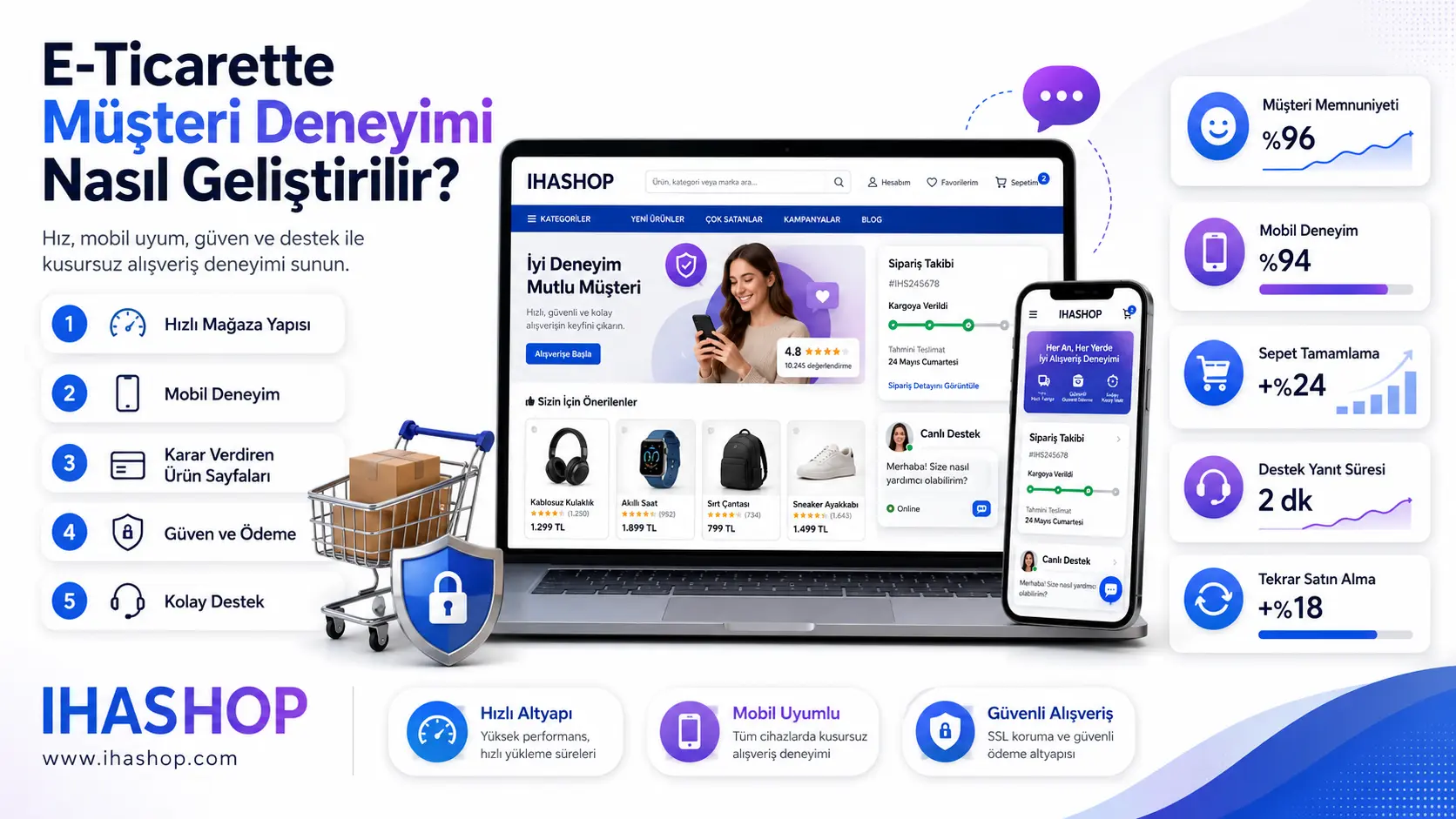
E-commerce customer experience (CX) encompasses the entire customer journey, from the exact moment a visitor lands on your online store to the post-purchase support phase. Today's digital consumers do not just buy a product; they experience your website's loading speed, visual design, transactional security, checkout simplicity, delivery efficiency, and after-sales support.
A seamless customer experience builds brand trust, reduces friction, and significantly increases repeat purchase rates. Conversely, a poor user experience will lead to lost sales, even if your products are of premium quality. Online shoppers expect a fast, intuitive, secure, and hassle-free shopping process.
Therefore, optimizing e-commerce customer experience goes far beyond basic web design. It requires a holistic approach that covers product management, content quality, mobile responsiveness, secure checkout systems, customer support, and order tracking. Below, we outline the key areas you must focus on to elevate your online store's customer experience.
Build a Fast and Intuitive Store Structure
First impressions are critical in e-commerce. Your pages must load rapidly, navigation menus should be clean, and users must find what they are looking for without friction. Visitors should never have to guess how to navigate your store.
If your category hierarchy is confusing, product filters are lacking, or the internal search bar fails to deliver relevant results, bounce rates will spike. The faster a user finds their desired item, the higher the conversion rate.
When structuring your online store, choose clear category names, keep product listing pages uncluttered, and make calls-to-action (CTAs) highly visible. Actions such as adding to cart, wishlist saving, product comparison, and filtering should operate smoothly and intuitively.
A fast, logical layout forms the foundation of great UX, allowing customers to navigate your platform naturally and complete purchases securely.
Prioritize Mobile Commerce Usability (Mobile-First Design)
The vast majority of online shoppers browse and buy using smartphones. Traffic originating from social media campaigns, organic Google searches, and email newsletters is heavily mobile-dominant. Consequently, mobile optimization is no longer an optional feature—it is an absolute necessity.
On mobile screens, interactive elements must be easy to tap, images must scale perfectly without pixelation, descriptions must be highly readable, and the checkout funnel must be streamlined. Complex menus, lengthy forms, and tiny buttons will inevitably lead to abandoned carts.
Mobile users make decisions quickly. They inspect the product, check the price, scan reviews, and add to cart if they feel secure. Ensure that key details like pricing, stock availability, shipping terms, and the 'Buy Now' button are immediately visible above the fold on mobile screens.
An optimized mobile experience not only boosts conversions but also maximizes the return on your digital advertising spend.
Create High-Converting Product Pages
The product page is the ultimate decision-making hub. To convert visitors into buyers, this page must offer more than just a basic title and price tag. It needs to provide comprehensive information that answers pre-purchase questions and builds buying confidence.
Incorporate detailed product descriptions, size guides, variant selectors, real-time stock levels, estimated delivery times, clear return policies, and authentic customer reviews. High-resolution multi-angle photography, zoom capabilities, and product videos further reduce the perceived risk of online shopping.
Missing details create doubt, leading either to a surge in support tickets or, worse, abandoned sessions. Anticipate your customers' questions and address them directly within the product page layout.
Display Clear Trust Signals
Trust is the cornerstone of e-commerce customer experience. First-time visitors need reassurance that your business is legitimate and that their sensitive data is safe before they proceed to payment.
Prominently display trust signals such as SSL certificates, secure payment gateway badges, transparent business contact details, privacy policies (GDPR/KVKK), terms of service, and clear return policies. Making this information easily accessible establishes instant credibility.
Do not bury these elements exclusively in your footer. Place secure checkout badges on cart pages, display shipping and return policies on product pages, and make your contact details highly visible on your customer service page.
Optimize and Simplify the Checkout Process
Once a customer adds an item to their cart, the checkout flow should be as frictionless as possible. Overly long forms, confusing error messages, mandatory account creation, and unexpected fees at the final step are the primary drivers of shopping cart abandonment.
Keep your checkout flow clean, rapid, and transparent. Clearly outline the required fields, offer guest checkout options, make shipping and payment selectors intuitive, and present a clear order summary before the final transaction.
Offering diverse payment methods—such as credit cards, digital wallets, and bank transfers—provides flexibility, catering to different consumer preferences and improving the overall checkout experience.
Offer Responsive, Multi-Channel Support
Whether a customer has a question before purchasing or needs assistance with a return, they must be able to reach you effortlessly. Providing accessible support is a vital component of the modern customer journey.
Ensure your communication channels are highly visible. Depending on your business model, you can offer live chat, helpdesk ticketing, email support, phone lines, or self-service FAQs. The goal is to ensure the customer never feels ignored.
Quick, consistent, and helpful responses across all channels build brand loyalty. In contrast, slow or contradictory answers will quickly erode trust.
Deliver an Outstanding Post-Purchase Experience
The e-commerce customer journey does not end when the payment is processed. Order fulfillment, packaging quality, shipping speed, and transparent tracking updates are equally critical to the overall experience.
Keep your customers informed at every stage of the post-purchase process. Automated notifications such as 'Order Confirmed', 'Shipped', and 'Out for Delivery' provide peace of mind and eliminate post-purchase anxiety.
Brands that master the post-purchase experience enjoy significantly higher customer lifetime value (LTV). When customers receive exceptional service from checkout to delivery, they are far more likely to become loyal, repeat buyers.
Leverage Data Analytics for Continuous Improvement
To truly optimize e-commerce customer experience, you must rely on data rather than assumptions. Regularly analyze your store's performance metrics to identify friction points.
Track key indicators such as high-exit pages, average session duration, cart abandonment rates, and search query reports. If a highly visited product page has a low conversion rate, audit its images, copy, pricing, or social proof. If checkout abandonment is high, analyze your shipping costs or form fields.
Continuous, data-driven optimization ensures your online store remains competitive, user-friendly, and highly profitable.
Conclusion
Optimizing the customer experience is the single most effective strategy for sustainable growth in the competitive e-commerce landscape. A superior experience fosters brand advocacy, drives customer retention, and maximizes conversion rates.
To build a successful customer journey, site speed, mobile responsiveness, detailed product pages, visible trust signals, streamlined checkouts, responsive support, and transparent shipping must work in harmony.
With IHASHOP, you can efficiently manage your products, content, orders, and customer relations from a unified platform, delivering a professional and trustworthy shopping experience. Leverage our robust e-commerce infrastructure to scale your online store, delight your customers, and achieve long-term e-commerce success.